



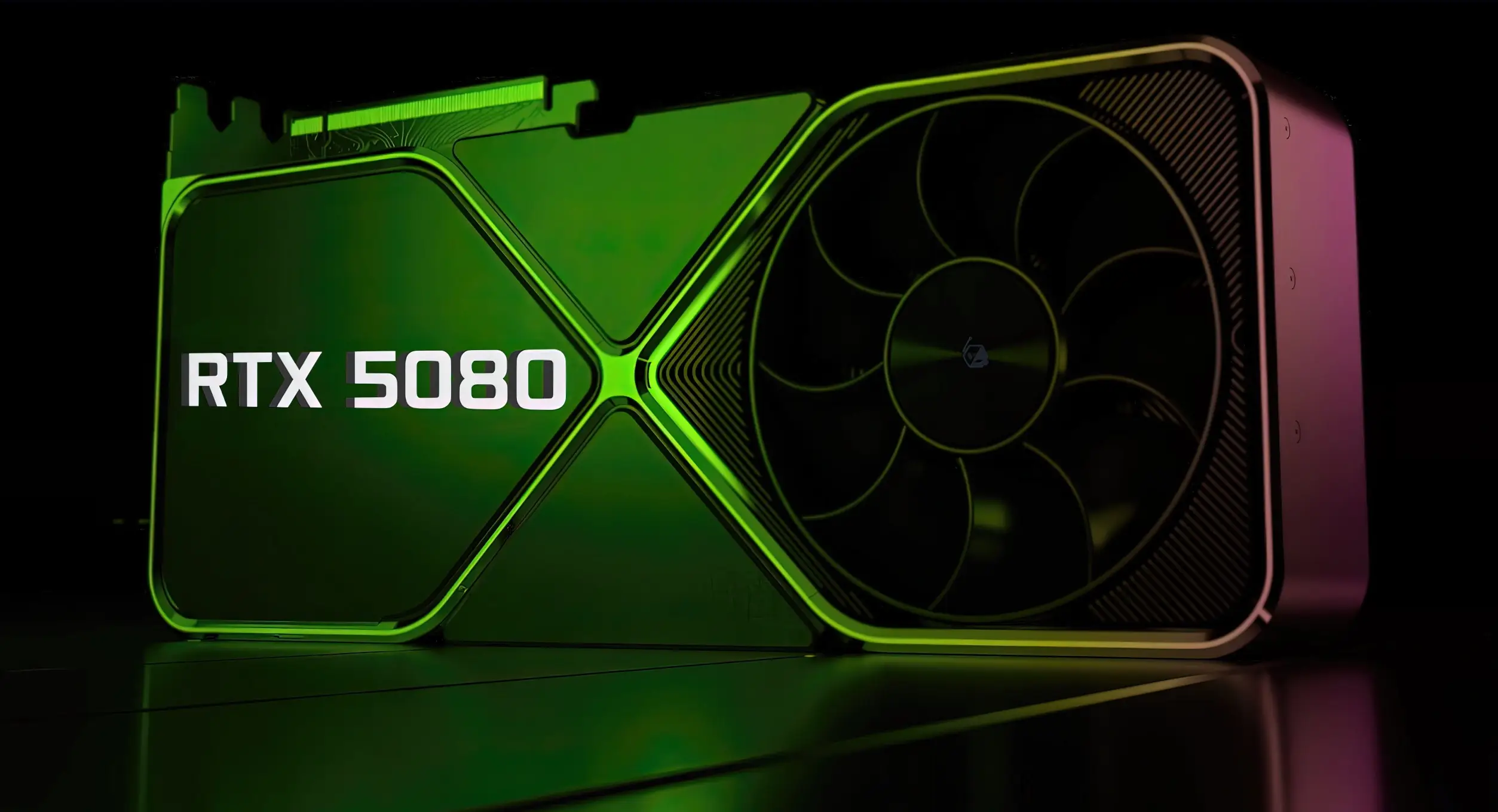
The anticipation surrounding NVIDIA’s RTX 5080 was sky-high. With promises of cutting-edge performance, many enthusiasts expected it to revolutionize the mid-range GPU market. However, reality fell short of these lofty expectations, and here’s why the RTX 5080 has been a letdown.
The price-to-performance ratio of the RTX 5080, with its $1,000 price tag, finds itself in an awkward spot. Positioned close to the RTX 4080, it fails to deliver a significant performance boost to justify the cost. Gamers seeking value for money might feel short-changed. Many argue that the RTX 5080 should have been named the RTX 5070, as it doesn’t quite meet the performance standards one would expect from an 80-series card. This mislabeling has led to further disappointment among enthusiasts who expected more from an 80-series GPU.
Another issue is the power connector complexity. The RTX 5080’s new 16-pin power connector necessitates an adapter for most existing power supplies. This adds unnecessary complexity and cost to what should be a straightforward upgrade process.
NVIDIA’s much-touted DLSS 4 feature, while a technical marvel, doesn’t feel like a groundbreaking improvement. The marginal gains in ray tracing and AI-driven enhancements do little to elevate the overall gaming experience, leaving many users underwhelmed.
Cooling conundrums also plague the RTX 5080. Despite its compact design, it struggles with effective cooling. The smaller size means less room for robust cooling solutions, resulting in higher operating temperatures and potential performance throttling during long gaming sessions.
Lastly, the VRAM limitations can’t be ignored. With only 14GB of GDDR6X VRAM, the RTX 5080 seems to be lagging behind the industry trend of higher VRAM capacity. For those looking to future-proof their systems, the RTX 5080’s VRAM offering might seem inadequate, especially for upcoming games that demand more memory.
The combination of these factors makes the RTX 5080 absolutely horrible for the price-to-performance ratio. It simply doesn’t deliver enough value to justify its high price tag, and many users feel that their money would be better spent on other GPUs that offer more bang for the buck. This pricing strategy feels like a greedy move by NVIDIA, prioritizing profit over customer satisfaction.
RTX 5080 vs. Previous Generations
Let’s compare the RTX 5080 with previous generation GPUs to highlight the differences:
| Feature | RTX 5080 | RTX 4080 | RTX 3080 | RTX 3070 |
|---|---|---|---|---|
| CUDA Cores | 9728 | 8704 | 6144 | 5888 |
| Memory | 14GB GDDR6X | 16GB GDDR6X | 10GB GDDR6X | 8GB GDDR6X |
| Memory Bandwidth | 672 GB/s | 760 GB/s | 760 GB/s | 448 GB/s |
| Base Clock | 2300 MHz | 2205 MHz | 1440 MHz | 1500 MHz |
| Boost Clock | 2600 MHz | 2505 MHz | 1710 MHz | 1725 MHz |
| TDP | 320W | 320W | 320W | 220W |
| Ray Tracing Cores | 80 | 76 | 68 | 46 |
| Tensor Cores | 320 | 304 | 272 | 184 |
In conclusion, while the RTX 5080 has its merits, it ultimately fails to strike the right balance between performance and value. For gamers and PC enthusiasts, there are better options available that offer more bang for the buck. The RTX 5080 is a classic case of expectations vs. reality, where the latter doesn’t quite meet the forme
